











Aboriginal Health and Medical Research Council of NSW 2014
Evaluation Highlights and Key Outcomes
Feedback from delegates was overwhelmingly
positive, many of them commenting on the
way in which the Symposium has grown
bigger and better every year, creating more
opportunities to learn, be inspired, network
and access resources to achieve better health
outcomes in their communities.
 Delegates learned new skills and gained new knowledge relevant to, and useful in their current
roles
Delegates liaised with other workers and stakeholders working in tobacco control in NSW
(primarily in NSW with a small number of delegates from interstate), sharing information,
forming new connections and strengthening existing networks
Current tobacco control and health promotion programs run by ACCHS and other organisations
in Aboriginal communities in NSW were showcased, highlighting the barriers and enablers,
success and challenges of such programs
Delegates’ perspectives on Tobacco resistance and control programs in NSW were expressed
and documented highlighting the need to coordinate efforts of all service providers to improve
health outcomes in Aboriginal communities
The AH&MRC has a more informed understanding of the needs, experiences and perspectives
of their member services and is better equipped to effectively plan appropriate programs for
Aboriginal communities in NSW and advocate on their members’ behalf.
“This symposium is leading the way”
“Great networking/program sharing opportunity”
Delegates learned new skills and gained new knowledge relevant to, and useful in their current
roles
Delegates liaised with other workers and stakeholders working in tobacco control in NSW
(primarily in NSW with a small number of delegates from interstate), sharing information,
forming new connections and strengthening existing networks
Current tobacco control and health promotion programs run by ACCHS and other organisations
in Aboriginal communities in NSW were showcased, highlighting the barriers and enablers,
success and challenges of such programs
Delegates’ perspectives on Tobacco resistance and control programs in NSW were expressed
and documented highlighting the need to coordinate efforts of all service providers to improve
health outcomes in Aboriginal communities
The AH&MRC has a more informed understanding of the needs, experiences and perspectives
of their member services and is better equipped to effectively plan appropriate programs for
Aboriginal communities in NSW and advocate on their members’ behalf.
“This symposium is leading the way”
“Great networking/program sharing opportunity”
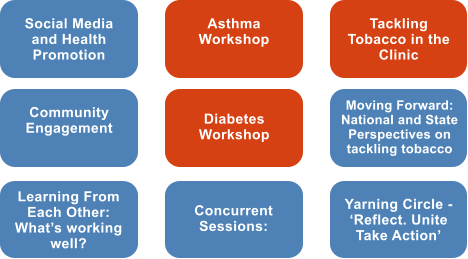
Topics covered over the Symposium:
The Yarning Circle was of particular importance as its purpose was to allow delegates to express their views about the Department of Health review, (September – December 2014) of the RTAHL program. The Yarning Circle thereby enabled the AH&MRC to better understand the experience and perspectives of its members and informed its role as the peak representative body and voice of Aboriginal communities on health in NSW.Key themes:
Evaluation and reporting/data collection and it’s use: the challenges of creating an
evidence base for tobacco resistance and control programs:
ACCHSs are great at developing and implementing programs but need to reserve time and gain
support to effectively plan evaluation so that quantitative data is used to support qualitative data
for justifiable amendments to programs.
Program funding:
Greater direction is needed from the funder in terms of program targets and evaluation
frameworks and to clarify roles of RHLTC workers
Greater funding security would enable services to plan, develop and measure health promotion
programs that address community needs over the longer term
Referral pathways and continuity of care: clinical work and health promotion:
Improved referral pathways and continuity of care are needed between GPs, nurses, hospital
staff and Tobacco workers to increase intervention opportunities and support people trying to
quit
Community engagement:
This is the key to the success of health promotion and tobacco cessation programs
Programs need to be tailored to the needs of the community
Use of local elders and role models and local social marketing campaigns play a huge role in
the success of programs
Partnering with a range of local organisations increases engagement and support for programs
and events
Research and Aboriginal communities:
Research data can inform our programs, and help us respond to the needs of our communities
Aboriginal people need to become more involved in research, build our capacity to be authors of
research which is about us and make sure the benefits of research are returned to our
communities
“We need to not just be researched, but be the part of the
research process”.
Keypad Evaluations
Throughout the Symposium, keypad evaluation activities were conducted to gather on-the-spot feedback from delegates about what they learned from the previous sessions. Prepared multiple-choice questions were displayed on the presentation screen at the front of the room and keypads for each delegate were distributed on the tables. Delegates used the keypads to select their responses which were tallied on the spot. These evaluation activities were popular and fun interludes between sessions and got plenty of laughs and interaction from the audience. “That was awesome- never done that before” “Way more fun than filling out a piece of paper”



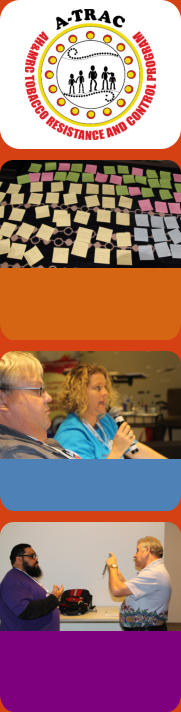
Evaluation doesn’t have to be
long. We had delegates using
post-it notes to let us know what
they liked and didn’t like!
Delegates had the opportunity to
talk about what matters to them
and their communities.
The Advisory Group sought
information by asking delegates
what they thought of the
Symposium using a HD video
camera.